When Healing Starts to Feel Like Another Job
Spiritual burnout usually arrives without any drama. Nothing breaks. You just notice you are managing your inner life the way you manage your inbox.
· Angela Bolton
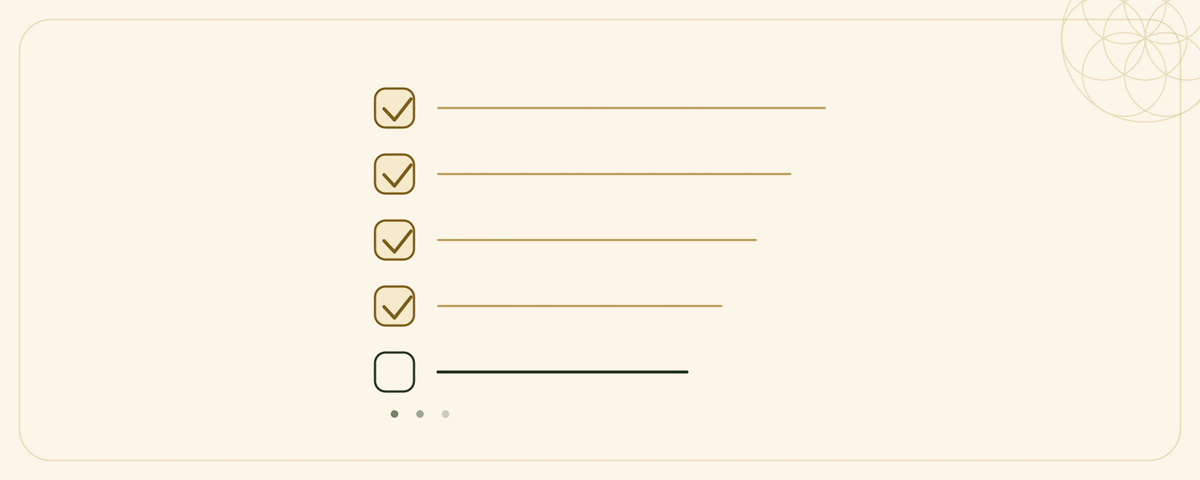
There is a particular kind of tiredness that only shows up after years of doing the work. It is not the tiredness of avoiding yourself. It is the tiredness of a practice that has quietly become an obligation — the morning sit you are now behind on, the modality you have not got round to, the thing you were told to look at in April and have been meaning to look at since.
Healing fatigue is what happens when a set of practices stops being a way of meeting your life and starts being a second job you did not apply for. The tell is the vocabulary. You stop saying "I want" and start saying "I should have." You start describing your own interior in the language of a backlog.
None of that means the work was wrong, or that you did it badly. More often it means the frame has outlived its usefulness. A frame built entirely around finding the next thing to fix will always find one, because that is what it was built to do. It has no exit condition. Given long enough, it will read your fatigue itself as one more problem requiring attention.
What tends to help is not another practice. It is a change in the question — from what still needs repairing to what is already here and unattended.
If one hour is not the shape of it
The Threshold exists for exactly this place: three 60-minute sessions across six to eight weeks, so that whatever opens has somewhere to keep moving instead of being re-opened from cold each time. Its value is continuity, not a discount.